CaviTAU® jawbone assessment
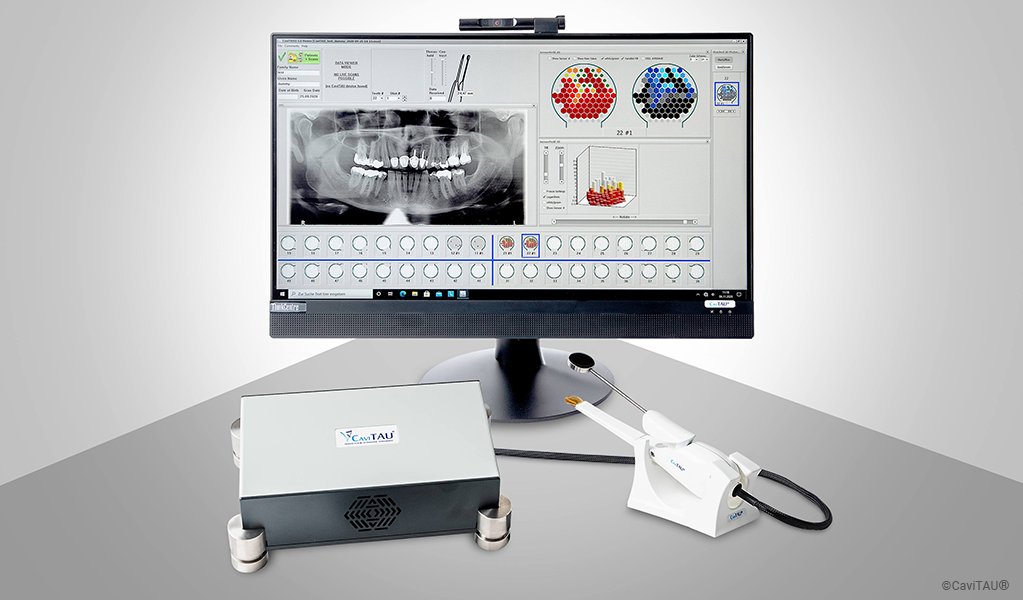
We look not only at individual teeth, implants or root-treated teeth, but also at the quality of the surrounding jawbone. CaviTAU® is a radiation-free, ultrasound-based system that provides information about bone density and quality in the jaw.
What is CaviTAU®?
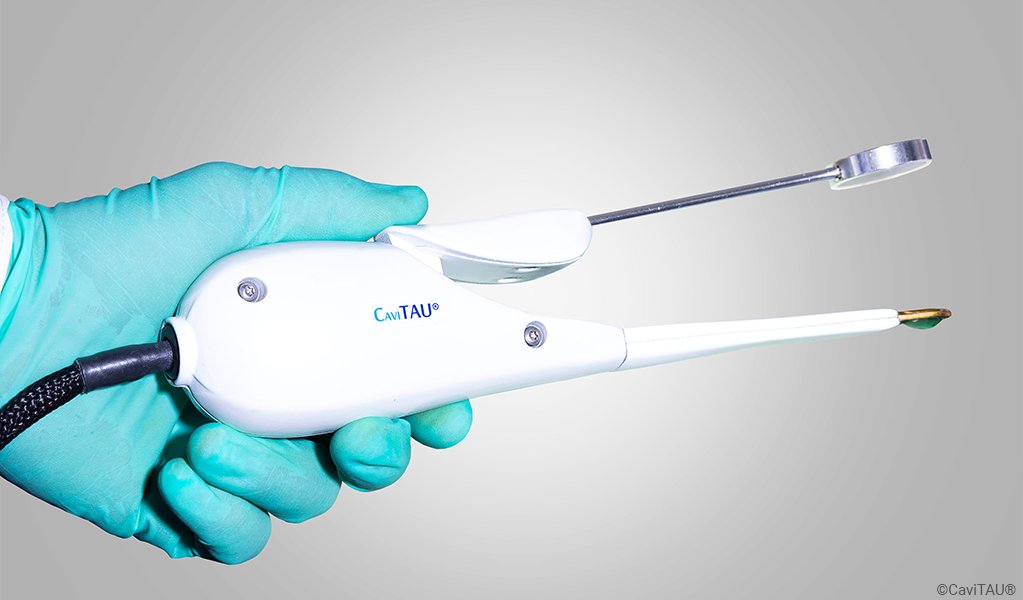
CaviTAU® uses trans-alveolar ultrasonography (TAU). Unlike X-rays, CBCT or OPG imaging, it uses no ionising radiation. The examination is non-invasive and generally well tolerated, and can give extra information about:
- Jawbone density and quality
- Bone conditions around dental implants
- Possible areas of reduced mineralisation
- Changes not always clearly visible on conventional X-rays
It can be used before implant treatment, during follow-up after implant placement, and as part of a broader biological assessment.
FDOJ / BMDJ
FDOJ (Fatty Degenerative Osteonecrosis of the Jaw), also called BMDJ (Bone Marrow Defect of the Jaw), describes areas of jawbone where the marrow structure may be altered. They are sometimes called "silent" because they may not hurt or show clearly on X-rays. The concept is still under scientific discussion, so we use CaviTAU® as a complementary tool within a careful clinical assessment, never as a stand-alone diagnosis.
RANTES/CCL5 and silent inflammation
RANTES (CCL5) is a signalling protein involved in inflammation. Research has investigated whether altered jawbone areas show increased RANTES/CCL5. It is not specific to jawbone problems, so findings are always interpreted together with your history, examination and, where appropriate, further medical assessment.
When may it be useful?
- Unexplained discomfort around an implant
- Persistent symptoms after root-canal treatment
- Implants that have not integrated as expected
- Concerns about bone quality before implant placement
- A wish for a radiation-free assessment of the jawbone
What happens during the assessment?
The examination is done from inside the mouth with ultrasound. Afterwards we discuss the findings in the context of your history and general health, and explain possible next steps. The aim is not to create concern, but to support well-informed decisions.
Related treatments
Biological dentistry
The mouth-body connection: biocompatible materials, prevention and a whole-person approach.
Learn more →Safe amalgam removal
Mercury-safe removal of old amalgam fillings with a full protective protocol.
Learn more →Ceramic implants with CeraRoot®
Our speciality: metal-free CeraRoot® one-piece zirconia implants that look natural and support healthy gums and bone.
Learn more →